Certify your filings. Defensibly.
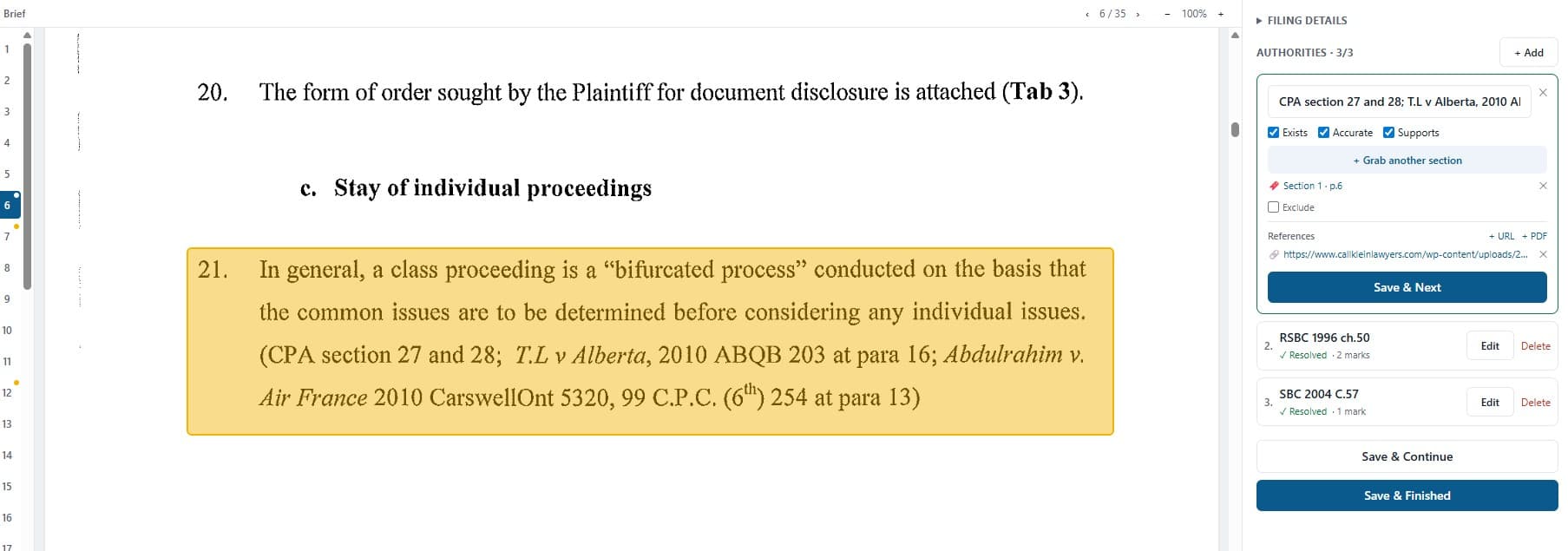
Courts are beginning to require that every legal authority you cite actually exists and is accurately presented — Florida is first, and more are following. ComplyAssist extracts every citation from your brief, walks you through a disciplined review, and produces a signed certification record — so the accountability is documented, not assumed.
Now also for contracts — purchase, lease, and employment agreements — and public-sector reports. Same engine: AI extracts every checkable item, a named human verifies each one.
AI-assisted, human-verified. Your brief is stored securely (encrypted at rest), never used to train AI, and deletable anytime.

Why this matters now
AI has made it trivially easy to file a brief with a citation that does not exist. Courts have noticed — and the consequences land on the lawyer who signed.
Real sanctions, real cases
In Mata v. Avianca, lawyers were sanctioned for a brief built on fake, AI-generated citations — and dozens of similar incidents have followed across the country.
The signer is personally liable
You cannot sanction a language model. The duty to verify is non-delegable: fines, stricken filings, disqualification, and bar consequences fall on the attorney who signs.
The rules are spreading
Florida Rule 2.515(d)(2) is an early, concrete example — not a local quirk. Courts and bars nationwide are moving the same direction. Florida is first, not last.
What you can certify
Court filings
Every case, statute, and rule cited in a brief — verified to exist, be accurately presented, and support the point. Built for Rule 2.515(d)(2)-style certifications.
Contracts
Purchase and sale, lease, and employment agreements. Verify every cross-reference, defined term, and cited statute in an AI-drafted contract before anyone signs it.
Reports & public documents
Staff reports, council reports, and policy briefs. Verify every cited source, figure, and bylaw before it enters the public record.
For government teams →How it works
Upload your document
Drop in a brief, contract, or report (PDF). AI extracts every checkable item and the claim it's cited for, then highlights each one right on the page for your review.
Verify each item
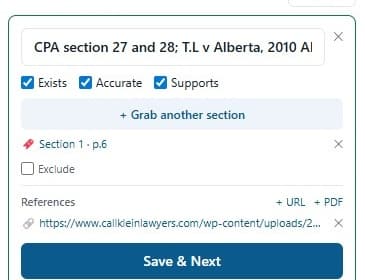
For each citation or reference, confirm it exists, is accurately presented, and supports the point. AI drafts a 'what to check' note; you decide.
Sign & download
Attest, sign, and get a PDF certification record plus a searchable audit trail across all your filings.
AI assists. You stay accountable.
The rules exist because AI hallucinates citations. So ComplyAssist never claims a citation is real or fake — it does the tedious reading and lets you do the verifying. Every record states plainly that citations were AI-extracted and independently verified by the human signer.
- Three-prong review: exists · accurately presented · supports the proposition.
- Signed PDF certificate that mirrors the rule's certification language.
- Searchable history of every certification, by case and date.
- Briefs stored securely (encrypted at rest), never used to train AI — delete anytime.
From the blog
View all posts →You signed it, you own it: personal liability under the new citation rules
When a brief cites a case that does not exist, the court does not blame the AI. It blames the lawyer who signed. Here is what that means as citation-certification rules spread.
Read more →Why AI invents citations — and what it means for your filings
Large language models do not look anything up. They predict text. That single fact explains why a fabricated citation can look flawless — and why a human still has to verify every one.
Read more →